-
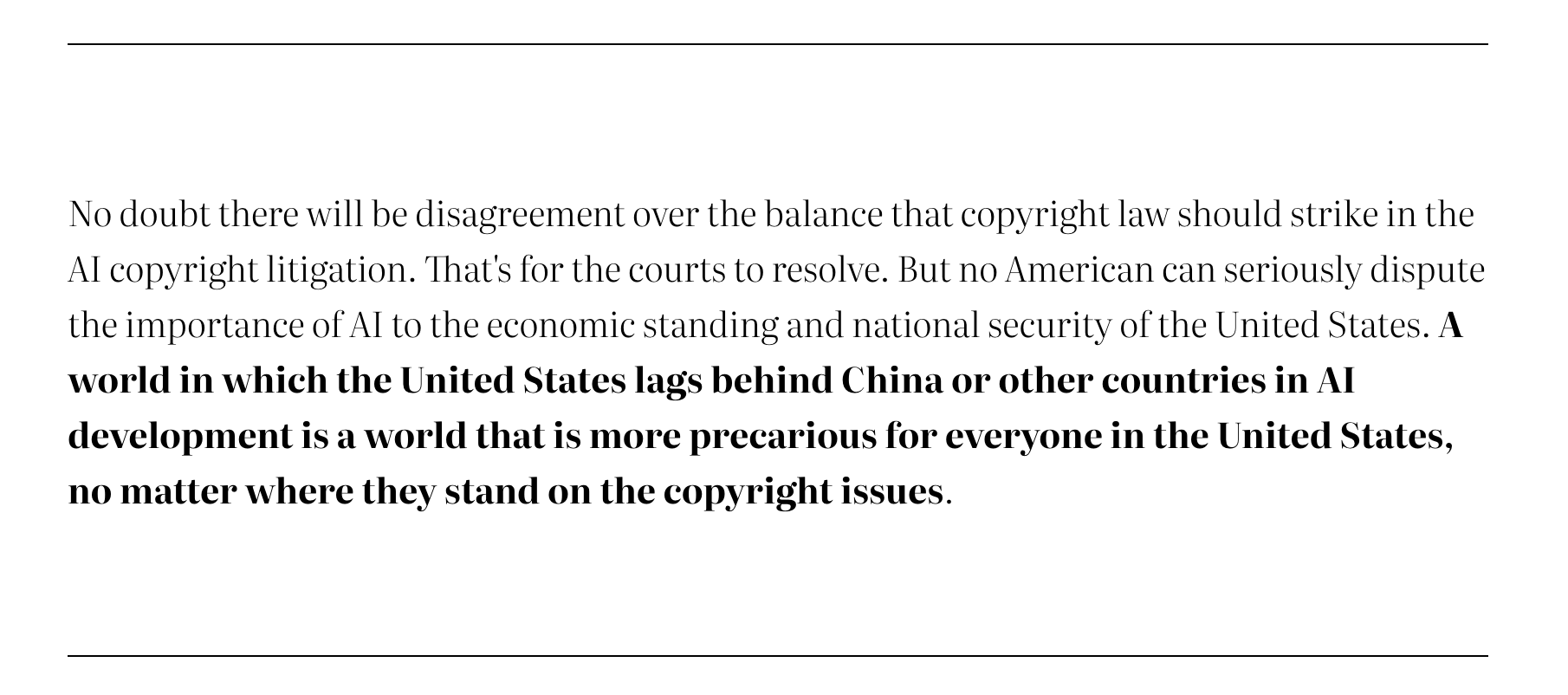
More on the United States’ Statement of Interest in advancing AI development by US companies
Read more: More on the United States’ Statement of Interest in advancing AI development by US companiesI read some commentary on the United States’ Statement of Interest filed, pursuant 28 U.S.C. § 517, in the OpenAI MDL litigation suggesting that such Statements by the United States are unusual. Based on my research, that’s not accurate. In fact, more than 400 cases cite the provision authorizing such Statements, 242 of which discuss Statements…
-
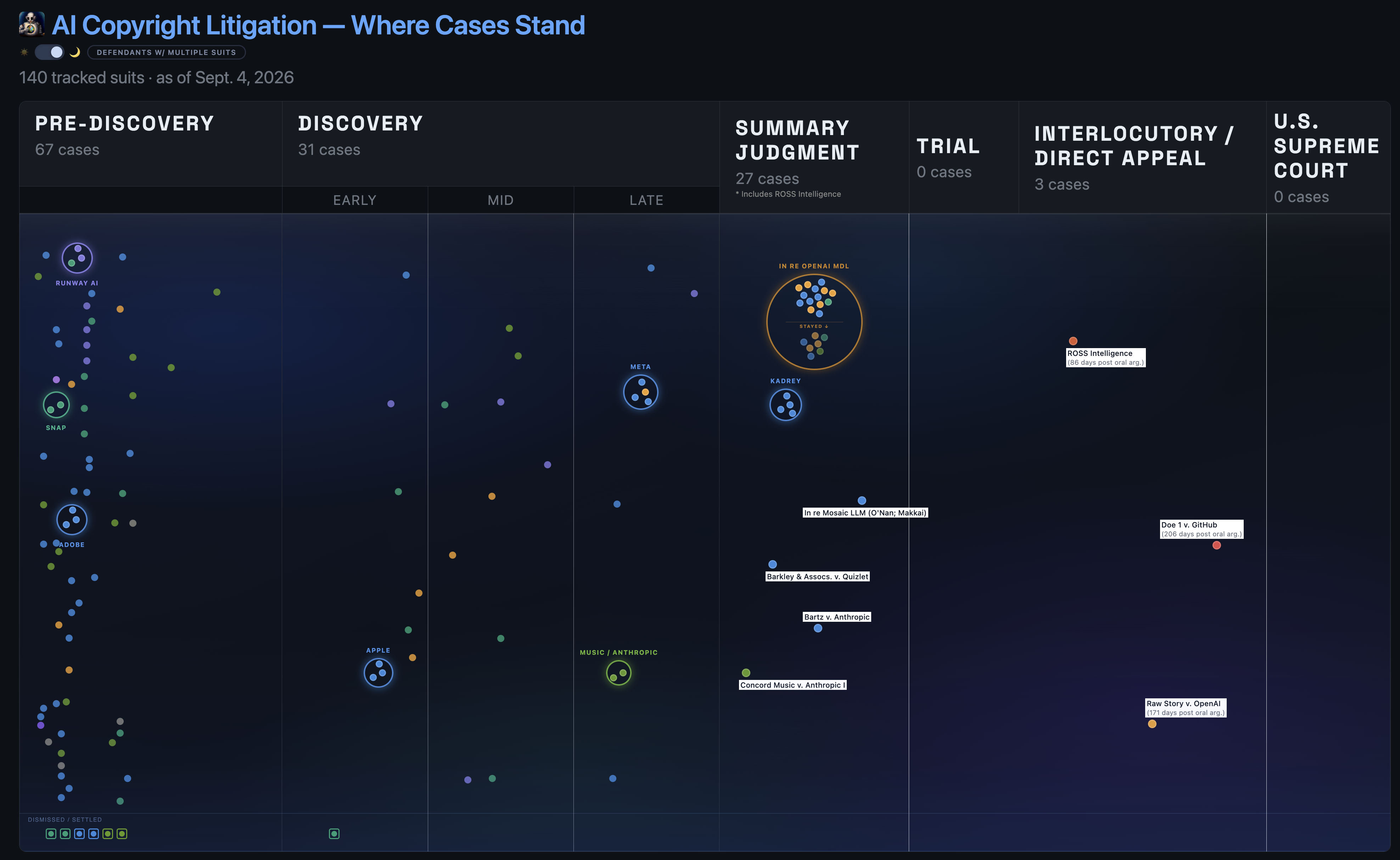
Summary judgment briefing starts in OpenAI MDL Litigation before Judge Stein
Read more: Summary judgment briefing starts in OpenAI MDL Litigation before Judge SteinToday, the parties on both sides in the MDL Litigation, In re OpenAI Copyright Infringement Litigation, will file their respective motions for summary judgment. Collectively, the plaintiffs are often grouped as the “News” Plaintiffs involving the New York Times and other news media and the “Class” Plaintiffs involving book authors and the Authors Guild. OpenAI…
-
Judge Stein issues stipulated sealing order as briefing for summary judgment commences in OpenAI MDL suits
Read more: Judge Stein issues stipulated sealing order as briefing for summary judgment commences in OpenAI MDL suitsToday, summary judgment briefs are due in the MDL litigation against OpenAI and Microsoft, including lawsuits filed by news organizations such as New York Times and book authors, including Authors Guild. Judge Stein issued a stipulated sealing order regarding the filing of briefs for summary and Daubert expert challenges. The sealing order pertains to confidential…
-
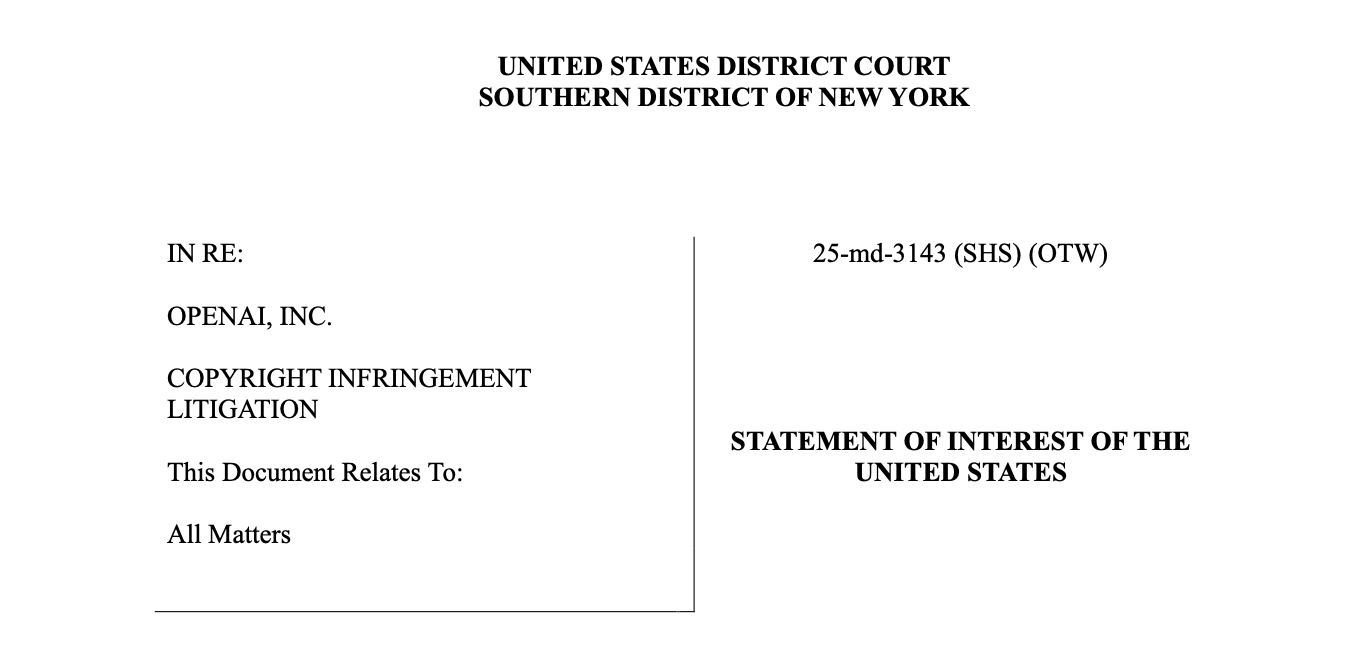
United States files Statement of Interest in OpenAI lawsuits: AI training is fair use; “dilution” is “deeply flawed” theory, in the view of the United States.
Read more: United States files Statement of Interest in OpenAI lawsuits: AI training is fair use; “dilution” is “deeply flawed” theory, in the view of the United States.Late evening, pursuant to 28 U.S.C. § 517, the United States just filed a Statement of Interest representing “the interests of the United States” in the fair use in AI training. The filing was in In re OpenAI Copyright Infringement Litigation before Judge Stein as the case heads into the summary judgment phase. The 19-page…
-
Judge Stein denies News Plaintiffs leave to add new contributory infringement claim v. Microsoft. News Plaintiffs, Ziff Davis already abandoned contributory infringement claim foreclosed by Cox Communications.
Read more: Judge Stein denies News Plaintiffs leave to add new contributory infringement claim v. Microsoft. News Plaintiffs, Ziff Davis already abandoned contributory infringement claim foreclosed by Cox Communications.In the In re OpenAI Copyright Infringement Litigation, Judge Stein issued two separate but similar rulings. They stem from the plaintiffs’ voluntary dismissal of their material-contribution theory of contributory infringement after the Supreme Court’s decision in Cox Communications v. Sony Music Entertainment, as well as their trademark dilution claim. Ruling on News Plaintiffs’ Motion for…
-
OpenAI faces discovery sanctions motion by New York Times
Read more: OpenAI faces discovery sanctions motion by New York TimesNew York Times and other news plaintiffs filed a motion for discovery sanctions against OpenAI for its alleged concealment of the ability to conduct relevant searches that the plaintiffs had requested, which they news plaintiffs say they discovered from the 2d deposition of Vincent Monaco: “Instead, its two-year effo1t to hide its ability to search its training data and output logs for News Plaintiffs’ copyrighted…
-
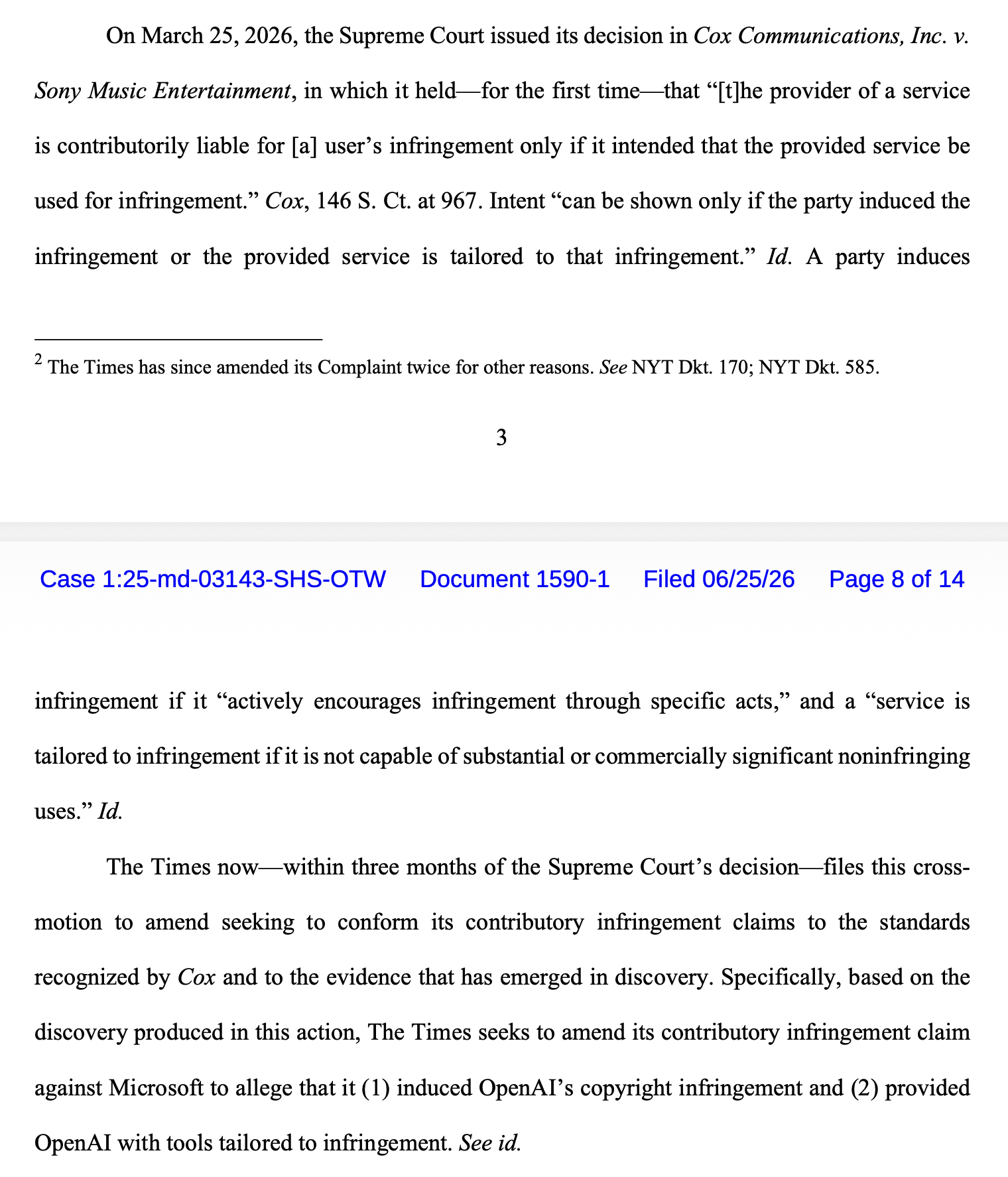
New York Times abandons contributory infringement claim v. OpenAI in light of Supreme Court’s Cox decision
Read more: New York Times abandons contributory infringement claim v. OpenAI in light of Supreme Court’s Cox decisionAfter OpenAI filed a motion for judgment on the pleadings that the New York Times could not meet the intent standard for contributory infringement set forth by the Supreme Court in Cox Communications v. Sony Music Entertainment, we wrote: “OpenAI’s brief seems quite strong in its explanation of the Supreme Court’s decision in Cox.“ The New…
-
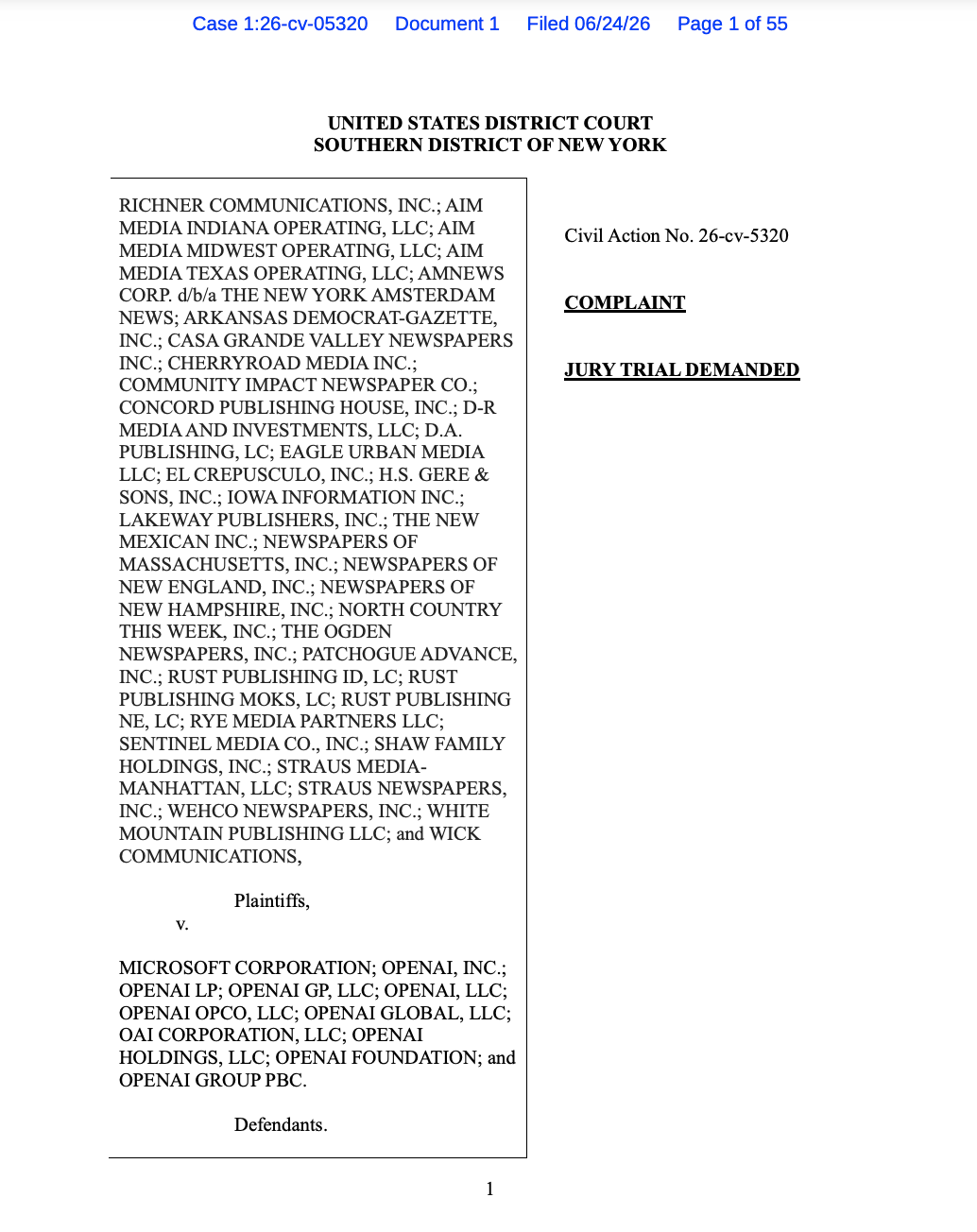
35 Local & Regional Newspapers sue OpenAI, Microsoft for alleged copyright infringement. 26th suit v. OpenAI and 11th v. Microsoft.
Read more: 35 Local & Regional Newspapers sue OpenAI, Microsoft for alleged copyright infringement. 26th suit v. OpenAI and 11th v. Microsoft.35 local and regional newspaper publishers just sued OpenAI and Microsoft for alleged copyright infringement in the training of their AI models with content of plaintiffs scraped from the web. The Complaint alleges: (1) direct infringement, (2) vicarious infringement, and (3) DMCA CMI removal. Most likely, this lawsuit will be stayed pending the resolution of…
-
New York Times CEO Meredith Kopit Levien exudes confidence in copyright suit v. OpenAI
Read more: New York Times CEO Meredith Kopit Levien exudes confidence in copyright suit v. OpenAINew York Times CEO Meredith Kopit Leviet exuded confidence in the New York Times’ copyright suit against OpenAI. Should OpenAI be nervous? Take a listen:
-
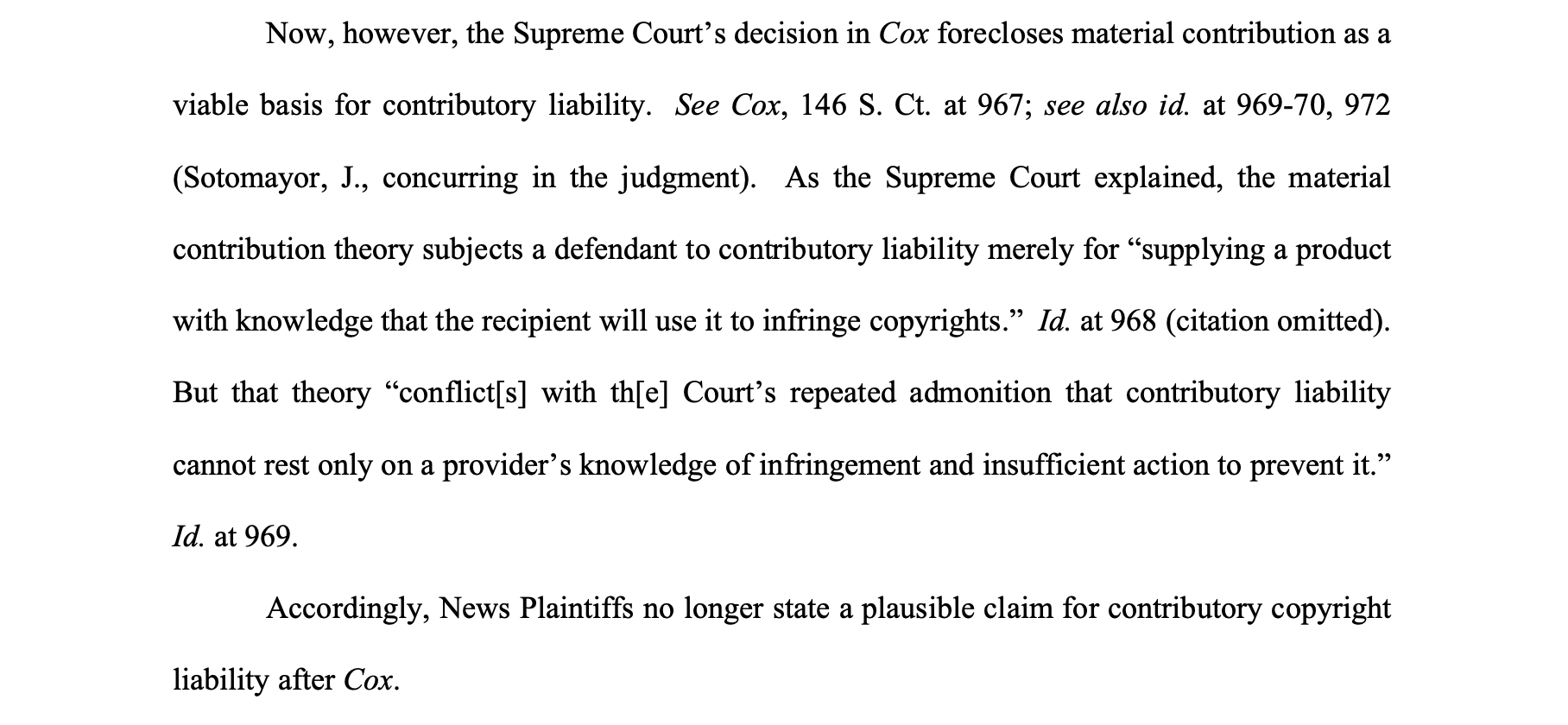
New York Times’ contributory infringement claims fails under Supreme Court’s standard set forth in Cox Communications, says OpenAI
Read more: New York Times’ contributory infringement claims fails under Supreme Court’s standard set forth in Cox Communications, says OpenAIThe Supreme Court’s recent clarification in Cox Communication v. Sony Music Entertainment that claims for contributory infringement under copyright law requires proof of intentional conduct by a provider of a service has now entered the picture in one of the most important set of cases, In re OpenAI Copyright Infringement Litigation. As we predicted, Cox…