I’ve been reading two new books on AI, former New York Times’ writer Kevin Roose’s The AGI Chronicles and the former Biden administration officials Ben Buchanan & Tantum Collins’ book, The Bitter Struggle. Both books are excellent—I highly recommend. (The latter book even discusses NVIDIA and Megaspeed before the ongoing controversy! Prescient.)
One striking similarity in both books’ coverage of the history of AI development in the United States is their focus on what AI researchers have called the “scaling laws.” The basic idea with scaling that AI researchers eventually discovered: increasing the model size, computing power, and amount and diversity of training data resulted in significant improvements or advancements in the AI model’s capabilities, following a power law (or predictable amount of improvement). Both books recognize the scaling laws’ critical importance to the U.S. advancement of AI models we have witnessed this decade. (Go to my timeline discussed below for citations.)

Because I have written extensively on the importance of the scaling laws, my eyes lit up reading both books. (I hope to add a summary of my writings here, but, for now, you can visit my law review article explaining how scaling provides a justification of fair use in AI training to advance the state of the art in AI capabilities).
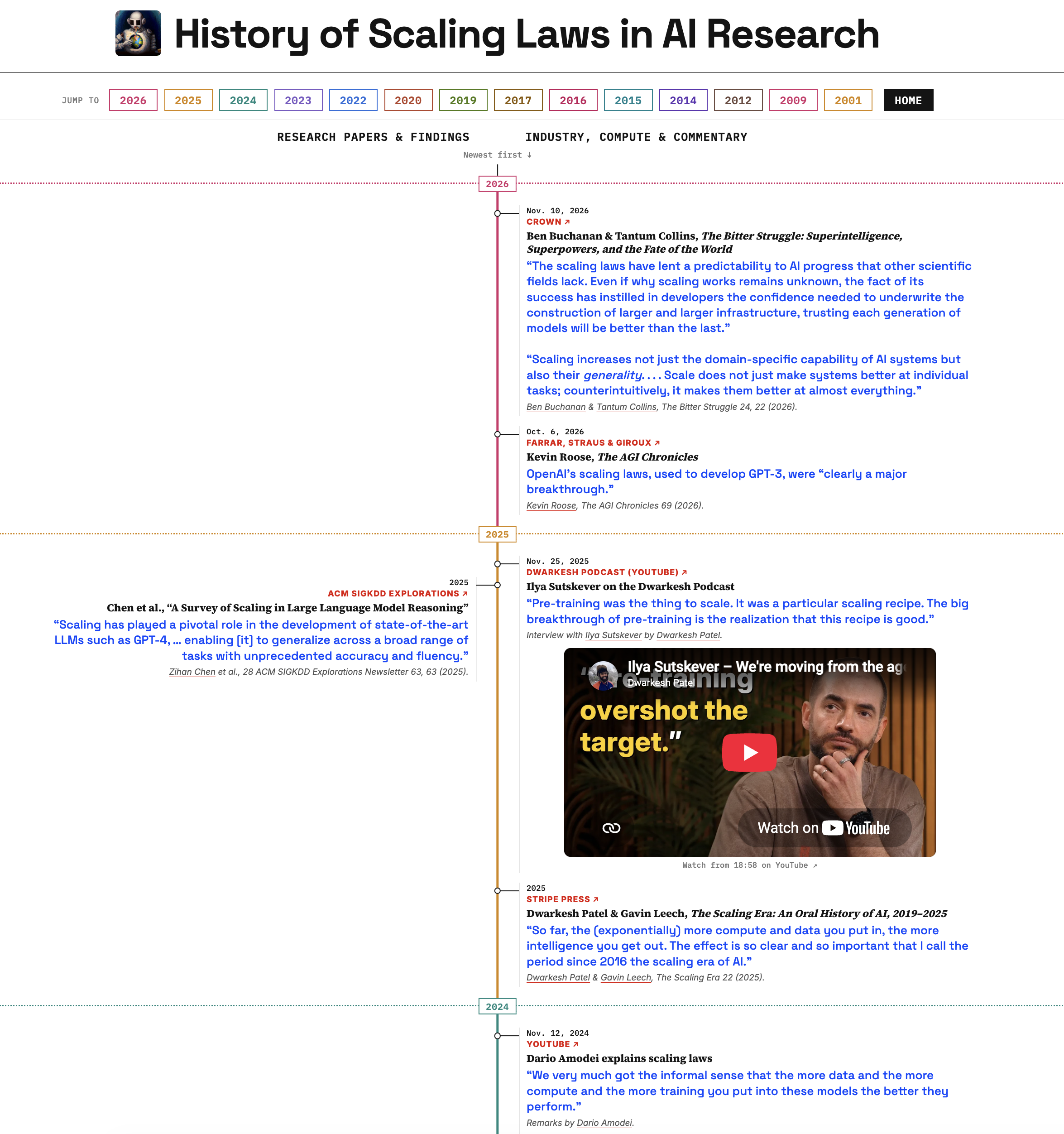
To add to the resources related to the scaling laws, I created a timeline on the History of the Scaling Laws in AI Research.Click below to visit our dedicated page, filled with relevant sources and videos:

DOWNLOAD PDF:
