On Monday, April 27 the Trial of the Century in Elon Musk v. Sam Altman will begin with jury selection.
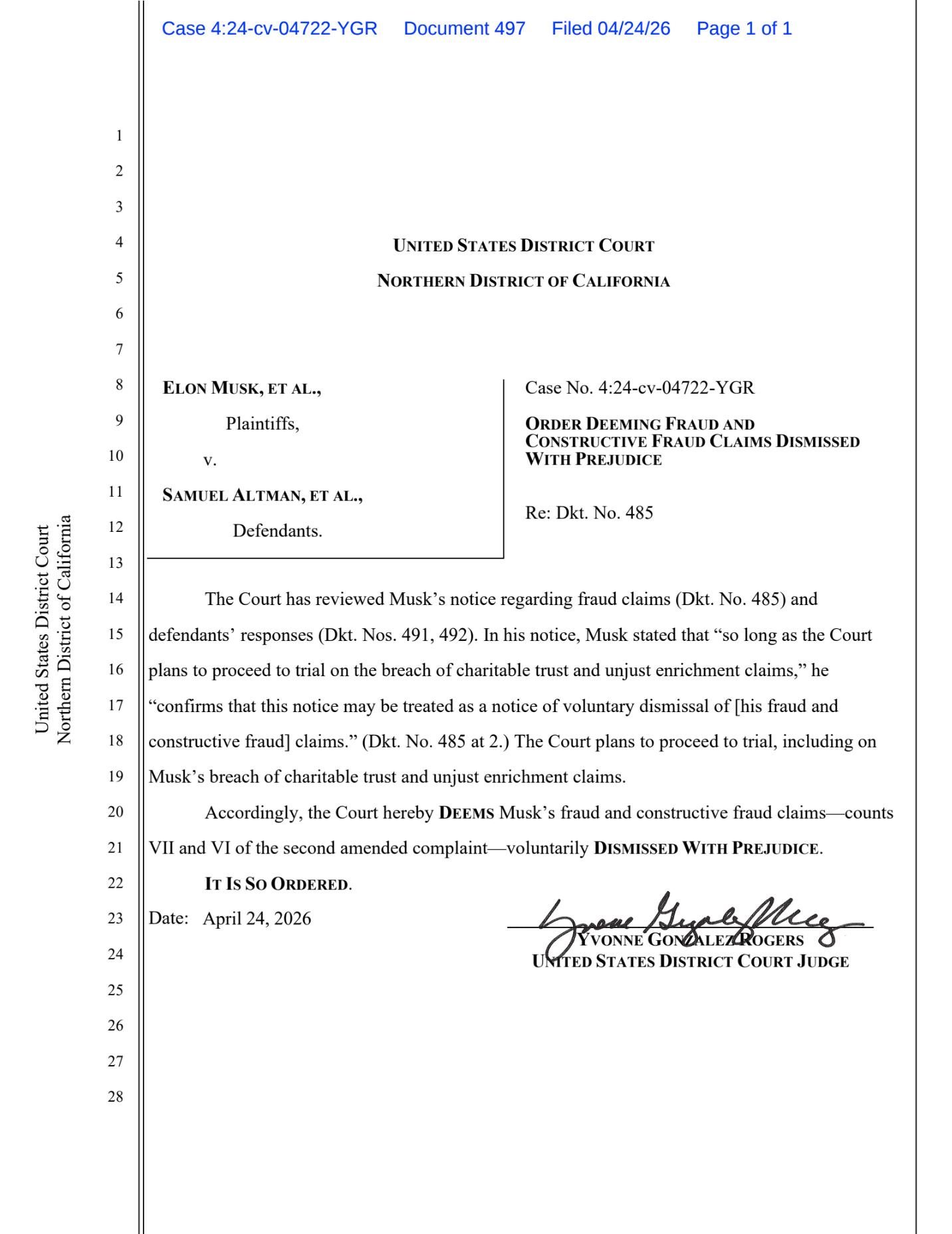
On the eve of trial, Elon Musk has agreed to drop his fraud and constructive fraud claims, which he had suggested he would do in his proposed jury instructions. Musk says it would help streamline the case:
“Plaintiff’s objective in making his proposal was to streamline the case for trial and to keep the case focused on Plaintiff’s claims for breach of charitable trust and unjust enrichment – the claims that relate most directly to Plaintiff ’s overriding goal of ensuring that OpenAI adheres to its public charitable mission and obtaining the equitable relief necessary to secure that result.”
This voluntary dismissal is consistent with Musk’s current strategy of focusing on disgorging the allegedly misused money and returning it to OpenAI the nonprofit (not to him).
Even though Judge Gonzalez-Rogers had already found sufficient evidence of possible fraud, Musk was no longer seeking compensatory damages, which precluded him from seeking punitive damages for fraud (or other intentional torts). Because Musk no longer seeks compensatory damages, Judge Gonzalez-Rogers ruled, earlier, that punitive damages are no longer available.
But this change in tactics on disgorgement may affect the amount of damages Musk originally sought. Musk’s expert proposed that the amount of Musk’s contribution to OpenAI should be valued up to $109.43 billion at the high end.
Musk contributed about $45 million in OpenAI, according to the company.
Judge Gonzalez-Rogers’ Order of Dismissal of Fraud Claims

